


What are battery passports, due diligence and vehicle circularity signalling for automotive supply chains?
Modern supply chains no longer move only physical goods. They move data.
In today’s geopolitical landscape, volatility has become the norm. Tariffs shift. Sourcing strategies change. Regulations evolve. Markets react.
Yet one concept has remained central since the pandemic which is that of resilience, and for good reason.
Across automotive, batteries, clean tech, critical raw materials, energy, and defence, billions are being mobilised to strengthen industrial capacity, reduce strategic dependencies, and make “Made in” products more competitive on the global stage. New funding programmes, industrial initiatives, and acceleration packages all point in the same direction: traceability and verifiable value chains are the new economic priorities to ensure long-term resiliency.
This matters not only for European manufacturers, but also for the global companies across global supply chains that need to meet rising traceability, compliance and market-access expectations.
In this context, product traceability is no longer just an operational “nice to have” for companies invested in sustainability. It is becoming a core business capability for market access, risk management and long term competitiveness and increasingly a foundation for a resilient supply chain.
Across the Union, a growing number of regulations are introducing the mandatory use of labels, data carriers and digital product passports, from batteries and electric vehicles to constructions, textiles, detergents, and toys. But this is more than an EU regulatory trend.
It reflects a deeper transformation: product data is becoming as essential to market access as logistics, quality control, or certification.
Companies that can track, structure, and share product data reliably gain:
- faster market access
- lower long-term compliance costs
- stronger customers and partners trust
- and more resilient supply chains
With the battery passport coming into effect in just one year, the direction is clear - but it is just the first step in a broader data journey for products.
What is a digital product passport?
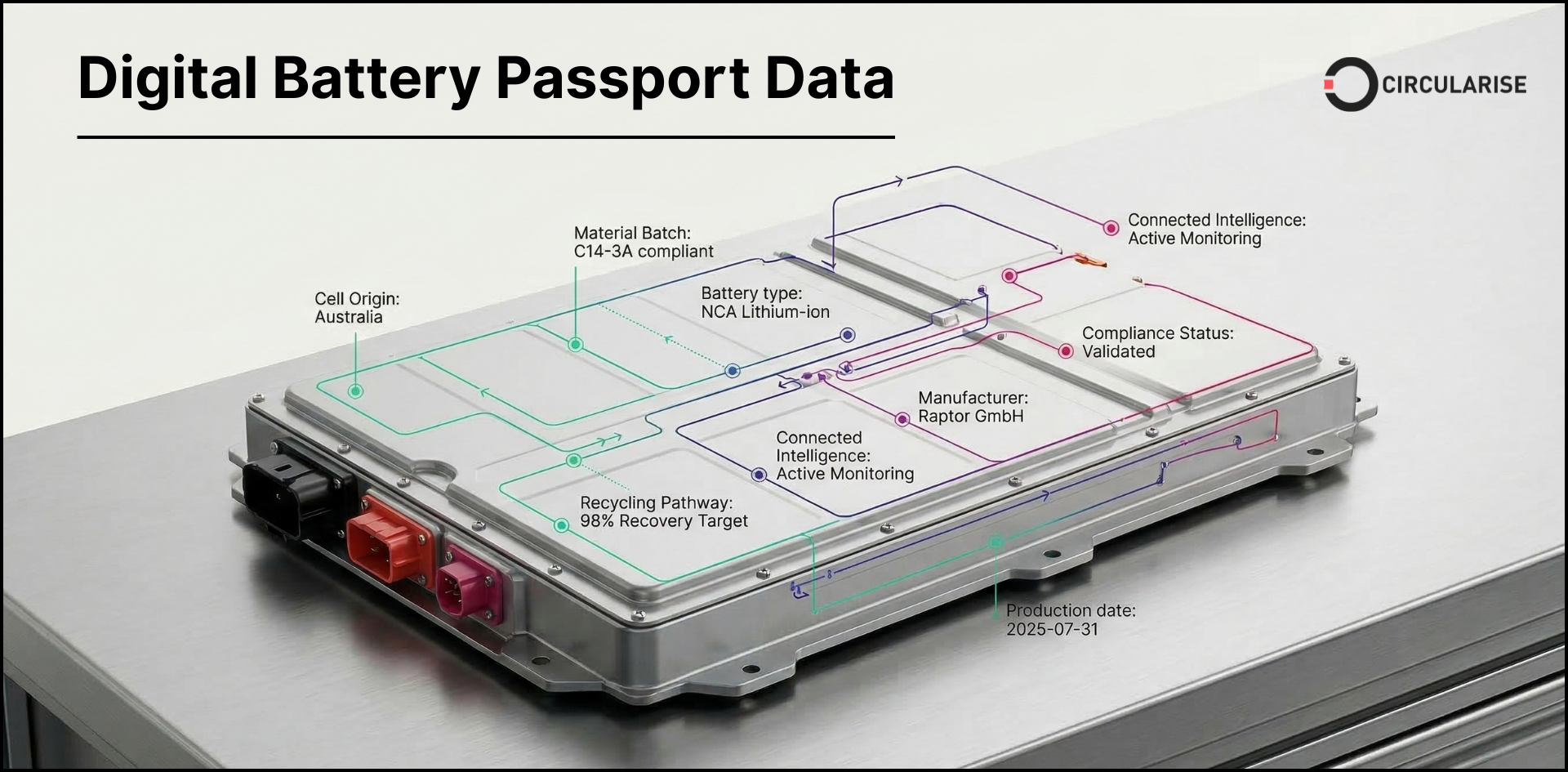
Much like your passport contains information about your identity and travels, a digital product passport (DPP) is a secure digital record containing all the information about a product and its journey throughout its entire lifecycle, from raw materials and manufacturing to its end-of-life.
From a normative EU context, the concept originates from the Ecodesign for Sustainable Product Regulation (ESPR) and is now being broadened into a growing number of sector-specific rules.
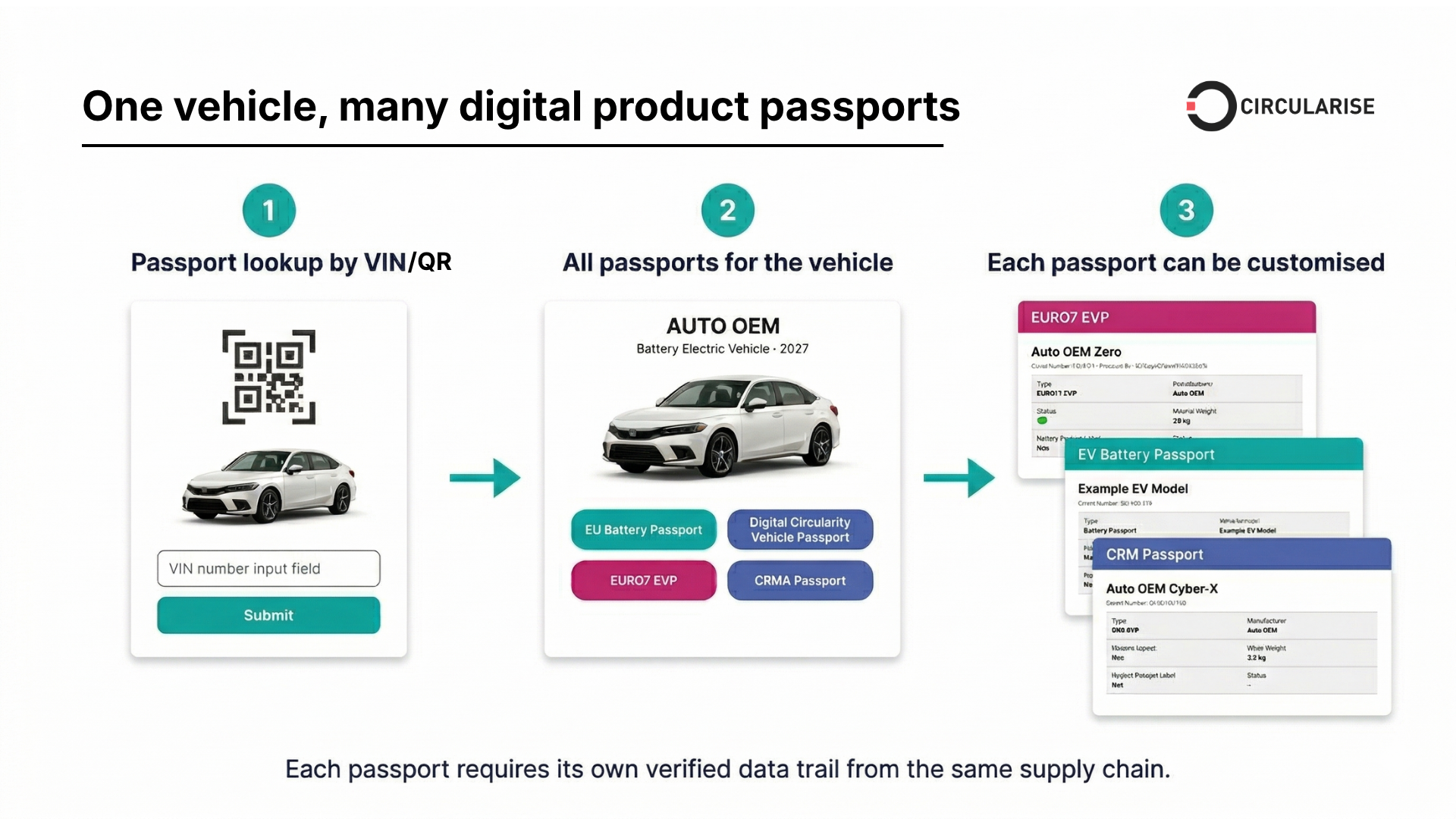
For example, the proposed EU End-of-Life Vehicle Regulations foresees the introduction of a Digital Circularity Vehicle Passport, while the Critical Raw Material Act refers to an indelible label and data carrier for permanent magnets.
Depending on the product and sector, information can include:
- material composition and origin
- carbon footprint and environmental performance
- repairability information
- recycled content
- supply chain actors and processing steps
But this is not only an EU-driven shift.
China is developing a digital identity and national traceability framework for new energy vehicle batteries, while Japan is advancing interoperable data-sharing initiatives across automotive and battery supply chains through the Ouranos Ecosystem.
Pressure also comes from other directions. In the US, the Inflation Reduction Act ties major clean-tech and battery incentives to verifiable supply-chain conditions, while long-standing conflict minerals disclosure rules require companies to trace and report the origin of specific raw materials used in their products.
Different regulatory paths, same outcome: structured product data is becoming a prerequisite for operating in global value chains connected to Europe.
Why are companies hearing about this now?
The Battery Passport is the first large-scale implementation of this concept.
From February 2027, batteries placed on the EU market will be required to carry a digital passport containing verified sustainability and supply-chain information. But batteries are only the starting point.
Over the next few years, the concept will expand across product categories, with the upcoming new Circular Economy Act and the EU Product Act expected to further embed traceability into how products are designed, marketed, and regulated, extending traceability requirements to additional sectors.
Of course, one may argue that in recent years, companies have seen regulatory timelines shift and some requirements being postponed. But despite the recent simplification debates and timeline adjustments by Omnibus, the overall direction has not changed.
Postponements may affect when companies need to act, but not whether they will. And this transition is not only regulatory — it is economic.
Indeed, not every challenge comes without opportunity. The shift toward digital traceability is being actively supported by billions. Recent initiatives such as RESourcEU and the Battery Booster are directing significant funding towards digital product data, monitoring critical raw materials, and resilient industrial value chains.
Resilience is the common thread.
- Resilience against supply disruptions.
- Resilience in the face of geopolitical uncertainty.
- Resilience to regulatory change.
- Resilience in volatile markets.
For companies, investing in traceability is increasingly a way to build that resilience directly into their operations.
Those who invest early benefit from:
- accelerated access to regulated markets, especially the EU market
- reduced compliance and audit costs
- higher credibility with customers and public authorities
- stronger supply-chain risk management
- faster adaptation to future regulatory updates
Companies that can provide reliable, structured product data will move more smoothly through procurement processes, customs procedures, regulatory checks, and customer onboarding.
In the years ahead, the question will no longer be whether your products are traceable, but whether your business is built to operate in a data-driven market at all.

Circularise is the leading software platform that provides end-to-end traceability for complex industrial supply chains. We offer two traceability solutions: MassBalancer to automate mass balance bookkeeping and Digital Product Passports for end-to-end batch traceability.



.png)

